
A commercial fleet that only drives around doesn't deliver intelligence.
When the field team relies on cars to visit clients, expand their market reach, and maintain relationships, the fleet ceases to be a support service and becomes part of the operational process.
The point is simple: if the company doesn't see the route, coverage, dwell time, and idle time, it doesn't know if the team is selling better or just traveling more.
That's why telemetry needs to be part of the business conversation. With control areas, POIs , and visit reports , travel ceases to be an opaque cost and becomes a productivity indicator.
Executive summary
The commercial fleet as a sales lever.More than just a cost center or field transportation tool, a fleet of sales teams is a strategic execution tool for increasing portfolio coverage and optimizing customer presence.
Telemetry beyond securityThe combination of POIs (Points of Interest), Control Areas, and Visit Reports transforms raw road data into real sales productivity metrics (travel time vs. service time).
Decisions driven by real data.With the Golfleet ecosystem, sales leadership eliminates guesswork, analyzes travel patterns, and ensures that consultants and salespeople are operating strategically, not out of habit.
Browse the content
What is commercial fleet management?
How to use telemetry for sales teams
The role of control zones and electronic fences in commercial fleets.
POI and visit reports: where productivity starts to become visible.
Productivity of external teams: what to really measure
How does Golfleet translate this into business intelligence?
From gross displacement to sales intelligence.

What is commercial fleet management?
Commercial fleet management is the job of managing vehicles used by teams that need to visit clients, serve regions, perform routine field tasks, and support the company's commercial operation.
This includes controlling not only the cost, maintenance, and usage of the vehicle, but also understanding how the fleet impacts:
- Frequency of visits
- Portfolio coverage
- Travel time
- Productivity in the field
- Quality of commercial execution
The problem is that many companies still treat their commercial fleet as if it only serves to transport the team from one point to another.
This interpretation reduces the role of operations. The commercial fleet is not just transportation. It's part of the strategy.
Why telemetry shouldn't be used only for security.
Security remains crucial. But stopping there is a waste of value.
When a company uses telemetry only to know where a vehicle is or if there was speeding , it only sees part of the story. The more strategic gain appears when the data starts answering business questions.
Eg
- Which clients are actually being visited?
- How long does the team stay at each point?
- Which regions are overburdened or underserved?
- Where there is hidden idleness between one visit and another.
- If the chosen route makes sense for the portfolio.
It is this shift in logic that is of interest.
Telemetry is no longer just a control tool; it's becoming a business intelligence applied to the fleet.
How to use telemetry for sales teams
Practical application begins when the company stops focusing solely on movement and starts focusing on execution.
In the context of field teams, this means using fleet data to understand how the day in the field actually went.
Running and use
Golfleet already works with readings of driving during and outside of operating hours, as well as usage data between ignition on and off. This allows for clearer observation of :
- time in motion
- Downtime
- Travelled distance
- Use outside of permitted hours
- Relationship between activity and idleness
These readings help to distinguish real productivity from mere commuting.
Visit report
Another important feature is the visit report , which allows you to improve strategy and productivity by building control areas and accessing information about which locations drivers visited and how long those visits lasted.
This point is crucial for sales teams because it transforms presence into data.
The company is no longer solely reliant on the employee's report and now has more context to understand frequency, duration, and coverage.
The role of control zones and electronic fences in commercial fleets.
In business operations, a visit without context is of little value. Knowing that the vehicle moved is not enough. It is necessary to understand if it reached the right customer, entered the expected area, and remained there for a time consistent with the type of service provided.
This is where control areas and electronic fencing logic for fleets come in.
In day-to-day operations, these resources help to define strategic points and monitor entries, exits, and time spent in relevant locations. This greatly improves the understanding of:
- Visits carried out
- Territorial coverage
- Route deviations
- Unproductive time
- Commercial effort by region
When used judiciously, this data ceases to be merely operational. It begins to guide the strategy of the field team.
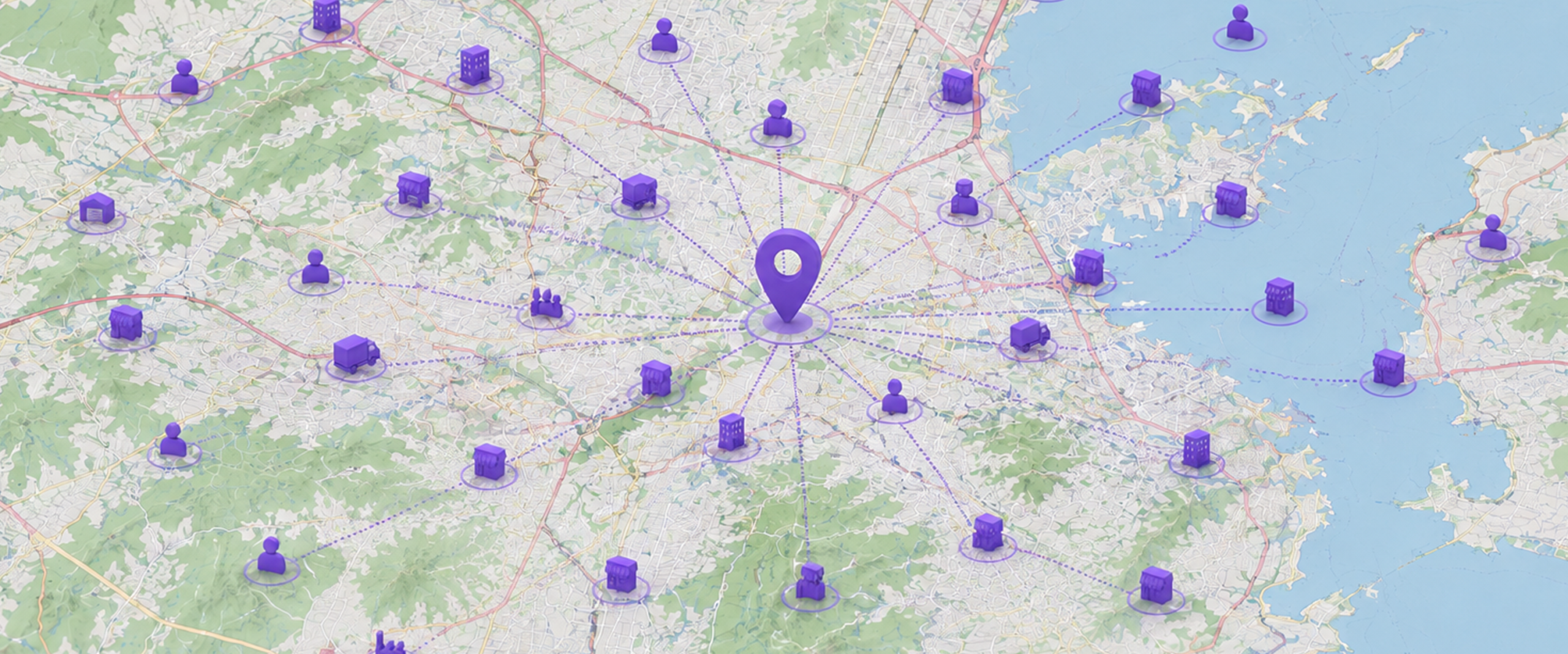
POI and visit reports: where productivity starts to become visible.
POIs , or points of interest, help structure the locations that matter to the operation. In a business context, this includes customers, prospects, branches, partners, distributors , or priority service areas.
When the company cross-references these points with the visit report and route analysis, it gains the ability to answer questions that were previously unclear:
- Which clients were visited?
- Which ones were no longer visited?
- How many times did each point become part of the team's routine?
- How much time was spent on each visit?
- Which regions are receiving disproportionate support?
This has a direct impact on business planning, portfolio prioritization, and productivity management .
Productivity of external teams: what to really measure
This is an important point because many operations measure volume, but not the quality of execution.
In the case of commercial fleets, some indicators make more sense than just mileage or the gross number of trips.
The most strategic ones are:
- Visits completed versus visits planned
- Travel time versus time spent with the customer
- Customers visited versus customers forgotten
- Coverage by region
- Activity versus idleness
- Use of the fleet during and outside of operating hours.
When the company looks at this set of data, it begins to see if the team is operating strategically or out of habit.
How does Golfleet translate this into business intelligence?
Golfleet enters this scenario by offering a structure that goes beyond tracking and helps organize the operational management of the fleet.
Among the most useful resources for this type of operation are:
- Control zones, to create boundaries and monitor movement in strategic regions.
- Visit report, to visualize where the team went and how long they stayed.
- Map, to locate vehicles and understand the distribution of the operation.
- Precise route planning, allowing access to detailed route data, fewer detours, and increased productivity.
- Uses, to accurately understand the activities between ignition being on and off
- Advanced reporting, with the possibility of customizing columns, filters, and automatic submissions.
When these resources are used together, commercial leadership gains more control over territory, routine review, and efforts redistribution.
When a commercial fleet stops operating out of habit and starts operating strategically.
This shift happens when the manager starts using operational data to make decisions , and not just to confirm what they already suspected.
That's when better questions come into play:
- the team is prioritizing the right customers
- There Excessive concentration of visits in a few regions.
- There poorly distributed portfolios
- O Time on the field is being well utilized.
- A Does the route help to sell better or does it just make the team waste time?
With this type of analysis, the commercial fleet ceases to be a center of movement and becomes a center of intelligence regarding execution.
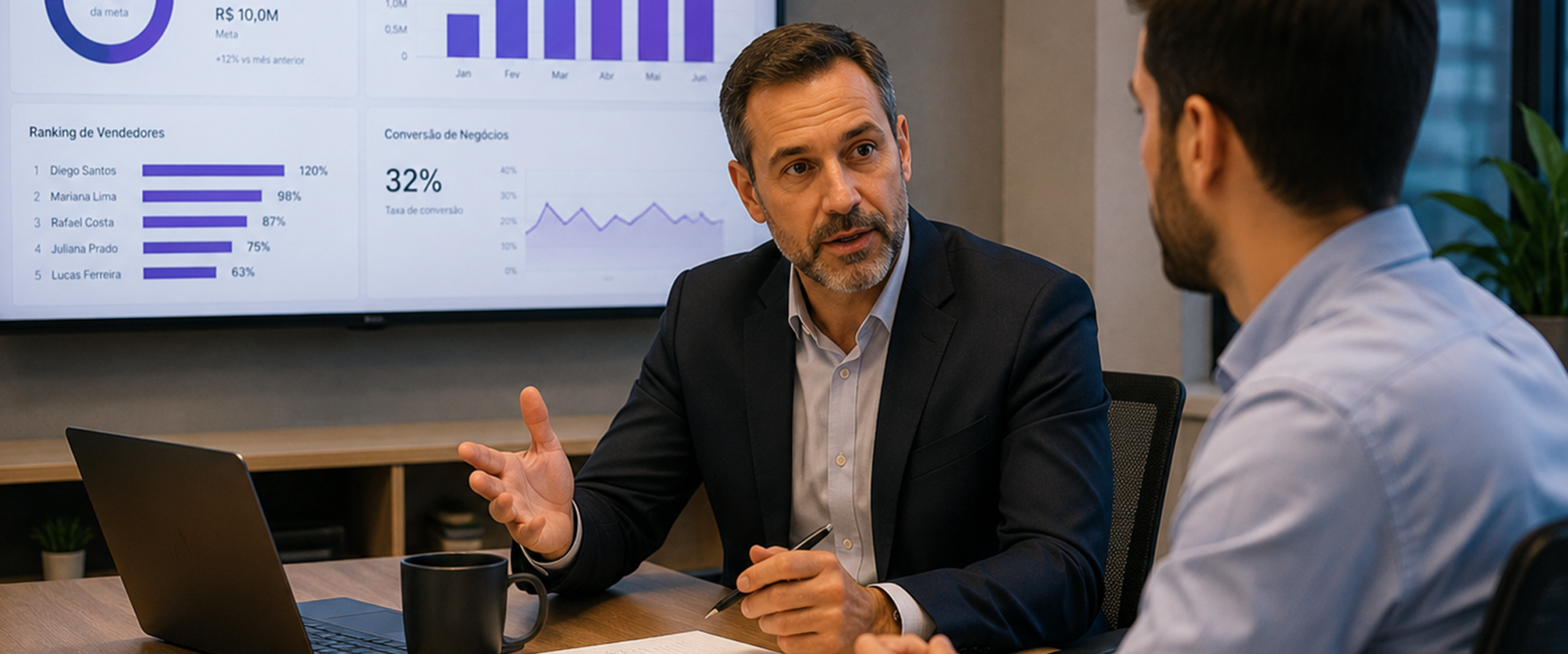
From gross displacement to sales intelligence.
Talking about commercial fleet management without discussing productivity, coverage, and performance analysis is no longer meaningful.
Companies that continue to view their fleet solely based on cost or location miss an important part of their operations. They lose context about the work of the field team, the quality of visits, and the actual use of the field as a source of intelligence.
When telemetry is used to support sales management, the scenario changes.
With control areas, POIs , visit reports , and usage readings, Golfleet helps transform movement into criteria, coverage into data, and routes into decisions.
Ultimately, it's not just about knowing where the team has been. It's about understanding whether that movement is generating results.
Frequently asked questions about telemetry in commercial fleet management.
What is commercial fleet management?
It involves managing the vehicles used by field teams to visit clients, serve territories, and support commercial operations, focusing on efficiency, productivity, and visibility of execution.
How does telemetry help field sales teams?
It helps to visualize displacement, mileage, utilization, time in the field, and visit patterns, providing a better basis for evaluating productivity, coverage, and portfolio prioritization.
What is a sales visit report?
It's a tool that shows where the team went, which locations were visited, and how long those visits lasted, helping to transform travel into operational and business intelligence.
How do geofencing systems work for fleets?
They define strategic areas on the map and help monitor the entry, exit, and stay of vehicles at relevant points in the operation.
What are POIs and how do they help with sales management?
POIs are points of interest, such as customers, prospects, branches, or key regions. They help structure the operational map and improve understanding of coverage, visit frequency, and field productivity.