Manager, you probably already measure traffic violations , you already know who gets the most tickets , you've already had that uncomfortable conversation with some driver. But is this interpretation correct?
A driver who travels 8 km per month and has 6 traffic violations may be in a much better situation than a driver who travels 1.500 km and has 3. If you only look at the raw number, you punish the first and ignore the second, and you do exactly the opposite of what you should.
This is where the driver incentive plan comes in : a structured model to fairly recognize those who drive well, not just those who drive poorly. And the best part: it can be implemented without requesting a new budget from management, because the savings generated by the change in behavior pay for the program itself.
Executive summary
An efficient incentive plan for drivers. It abandons the raw number of infractions and adopts the metric of infractions per kilometer driven, ensuring a fair comparison that separates high risk exposure from the actual quality of driving.
When using the Golfleet Telemetry ranking And with the transparency of the Golfleet Driver app, management transforms raw driving data into public recognition, reducing the volume of infractions and consolidating a non-punitive safety culture.
Browse the content
Why rewarding good drivers makes more sense than punishing the worst.
What makes a driver incentive plan truly fair?
How to use the Golfleet ranking to identify the best drivers
How to transform savings into rewards without creating new costs.
Step-by-step guide to creating an incentive plan for drivers.
How to present the program to the board and drivers.
Data becomes recognition, recognition becomes culture.

Why rewarding good drivers makes more sense than punishing the worst.
A culture based solely on warnings has its limits . It may generate momentary obedience, but it rarely builds consistent change.
The driver starts to worry about not appearing bad , not necessarily about improving their driving. The data becomes a source of frustration, and recurring frustration doesn't build engagement.
The value of recognition in driver management.
Recognition works because it reinforces the right behavior publicly, instead of just punishing the wrong behavior in private. When a driver knows that driving well is seen and valued, they have a concrete reason to maintain the standard , not just to avoid reprimand.
Safety and engagement in the same movement.
The key point is that driver incentive plans and a safety culture go hand in hand. You don't have to choose between "being strict about safety" or "being kind to the team." A well-designed driver incentive program delivers both at the same time: fewer violations and more engagement.

What makes an incentive plan truly fair?
The most common mistake is looking only at the raw number of infractions. If you rank drivers solely by the total number of infractions , you are comparing unequal things.
A driver who drives more naturally has a higher statistical chance of committing an infraction. This doesn't mean they drive worse, it means they are more exposed.
Why traffic violations per kilometer driven is the smartest metric.
The Golfleet fleet management system displays proportional indicators of traffic violations based on kilometers driven , violations per 100 km, or per 1.000 km driven. This metric levels the playing field for comparison: instead of asking "how many violations did this driver have?", you ask "how many violations did this driver have, proportionally to how much they drove?".
In the case of Copar , a Golfleet client, this type of monitoring helped the company reduce the volume of traffic violations from between 5 and 6 to an average of 800 , a reduction of over 80%.
Read more: Copar reduces the number of infractions by more than 80% with the use of telemetry.
How to separate risk exposure from driving behavior
With proportional metrics , you separate two groups that are often confused: those who drive little and luckily don't expose themselves, and those who drive a lot and still maintain a safe standard. The second group is the one that deserves recognition, and it is precisely this group that raw metrics hide.
How to use the Golfleet ranking to identify the best drivers
- Behavior based ranking
Golfleet Telemetry already offers behavior- based ranking , with readings of infractions , time , distance , and speed . This means that the manager doesn't need to build this analysis from scratch: the database already exists within the platform. The driver ranking acts as the starting point for the entire program: it transforms scattered driving data into an ordered list , ready to guide who should be recognized.
- Cross-referencing data on traffic violations and infractions.
The system allows for the identification of those most responsible for traffic violations , as well as the visualization of drivers who did not commit any violations during the period. This cross-referencing is what transforms raw data into reward criteria.
- How to isolate those who drive a lot but don't commit traffic violations.
In practice, the manager uses the ranking to answer a specific question: who is exposed (drives a lot) and yet maintains a low rate of infractions? These are the drivers who deserve to be included in the recognition system , because their result is not luck, it's a standard.
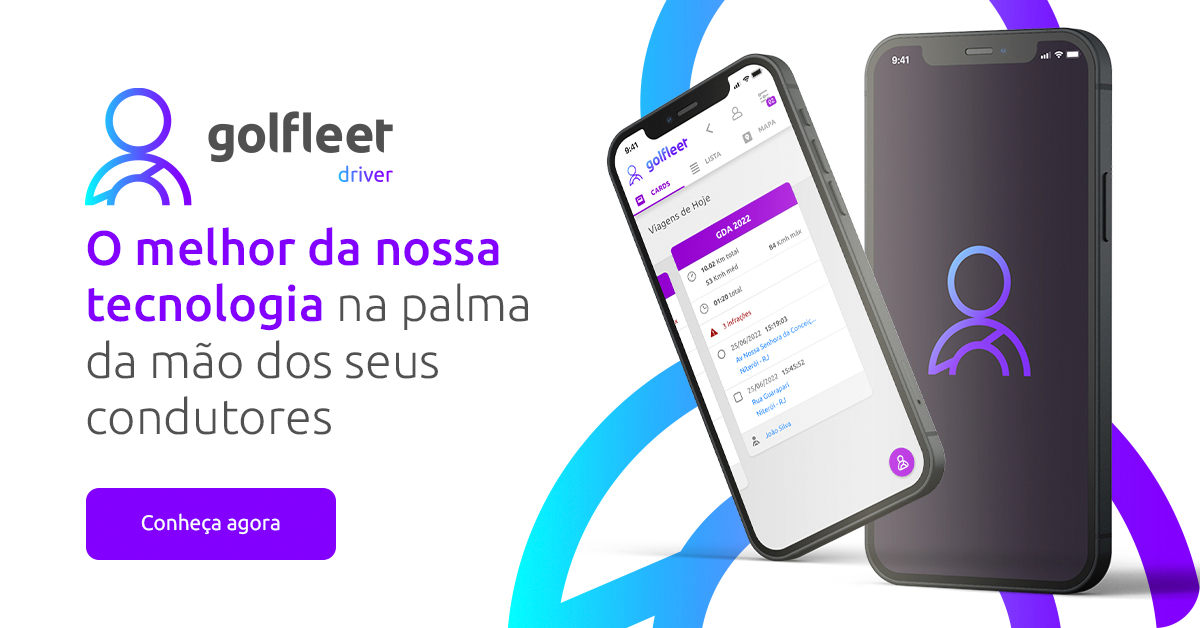
In the Golfleet Driver app , the driver can also access graphs showing traffic violations committed every 100 km driven, which helps provide transparency and direct feedback to the driver, without relying solely on conversations with the manager.

How to transform savings into rewards without creating new costs.
Here's the point that changes the conversation with management: you don't need to ask for a new budget . Fewer infractions mean fewer fines paid . Safer driving tends to mean less vehicle wear and tear and fewer critical events. This savings is what funds the recognition.
Fuel economy and maintenance costs as the source of the award.
More stable handling , less acceleration and harsh braking , for example, is usually associated with less component wear and lower fuel consumption . Add to that the reduction in fines and you have a real financial basis to support the bonus, without inventing a new budget line.
The reasoning is simple: you measure the savings generated by improved behavior (fewer fines, less corrective maintenance), and you reinvest part of that savings as recognition for those who generated that result . The program sustains itself through the very efficiency it creates.
Step-by-step guide to creating an incentive plan for drivers.
- Define the program's objective.Reduce infractions? Reduce accidents? Ensure consistency? Choose a central focus to avoid diluting the criteria.
- Choose the indicatorsUse traffic violations per kilometer driven as the primary basis, supplementing with... data based on speed, time, and distance, which the Golfleet ranking already provides.
- Establish simple and transparent rules.: The biker You need to understand exactly what is being measured and why. Confusing rules breed distrust.
- Define the billing period: MonthlyBimonthly or quarterly. Very short periods can generate statistical noise; very long periods reduce the sense of progress.
- Structure the awards and recognition process.Define whether the recognition will be financial, non-financial, or a combination of both, always based on the savings generated.
Gamification in fleet management: how to engage without infantilizing the program.
Golfleet's management system already supports the database: rankings , indicators , and behavior reports . Applying gamification to fleet management doesn't require any new tools; the methodology, how the competition works, the frequency of ranking publication, and the recognition format are all built by the manager based on this existing database.
The goal of gamification is not to create fierce competition between drivers, but to give visibility to individual progress . Showing the driver where they are and what they need to improve tends to work better than simply comparing positions in the ranking.
How to use gamification without losing credibility.
Gamification only works if the criteria are perceived as fair . That's why the metric of traffic violations per kilometer driven is so important here: it removes the distortion that would make the program seem arbitrary.

How to present the program to the board and drivers.
For the board , the central argument is the self-financing cycle : fewer fines, less wear and tear, the same fleet operating more efficiently. The program is presented as a reinvestment of savings, not as a new cost.
For the team, communication needs to make it clear that the program is designed to recognize , not monitor . Showing that the criteria (infractions/km) already favor those who drive more and expose themselves more helps build that trust.
By anchoring recognition in objective and proportionate data , the program reinforces, in practice, the behavior you want to see: more attentive , more predictable , safer driving . This is how a well-structured incentive plan transforms into a safety culture in the fleet, not as mere rhetoric, but as a routine supported by data.
What to avoid to prevent the program from falling apart in a few months.
A well-designed driver incentive program can quickly lose its effectiveness if certain common mistakes are not avoided from the outset.
- Unrealistic goalsIf the goal is unattainable for most of the fleet, the program loses credibility in the first few months. Nobody engages in something that seems impossible.
- Too many criteriaThe more indicators The more you mix things up in the evaluation, the harder it becomes for the driver to understand exactly what is being measured. Simplicity is key to the program's success.
- Lack of transparencyIf the driver can't keep track of their own score, as they do in Golfleet Driver, for example, they don't trust the result, even if the criteria are fair.
- No-appeal prizeRecognition that the team doesn't perceive as valuable doesn't generate engagement, regardless of how well-calculated the underlying criteria are.
- Reading data without contextAssessing traffic violations without cross-referencing mileage drives causes the program to revert to the very trap it's supposed to solve: the unfair comparison between those who drive a lot and those who drive little.

Data becomes recognition, recognition becomes culture.
Ultimately, the incentive plan for drivers isn't about creating yet another reward program. It's about using data you already have : rankings , traffic violations , mileage , to fairly identify who is driving well, and transform that into self-sustaining recognition.
Do you want to structure a zero-cost incentive plan for drivers in your fleet using the ranking and infraction data that Golfleet already provides? Talk to Golfleet.
Frequently asked questions about the incentive plan for drivers.
What is a driver incentive plan?
It is a structured program designed to recognize and reward drivers based on objective behavioral indicators, such as traffic violations proportional to mileage driven, rather than simply punishing those who make the most mistakes.
How do you create a fair driver ranking system?
Use infractions per kilometer driven instead of the total number of infractions, so as not to penalize those who drive more and are therefore naturally more exposed.
Why use traffic violations per kilometer driven instead of total violations?
Because this metric levels the playing field in comparisons between drivers with different levels of exposure, it shows who truly maintains a safe driving standard.
Does rewarding drivers really help reduce fines and costs?
Cases like Copar's demonstrate this potential: the company reduced the volume of traffic violations from between 5 and 6 to an average of 800, exceeding an 80% reduction.
How does telemetry help create a recognition program?
Golfleet Telemetry offers behavior-based ranking, with readings of infractions, time, distance, and speed, as well as proportional indicators of infractions per kilometer, the database for structuring the program.
What rewards make the most sense for fleet drivers?
This varies by operation, but the essential point is that recognition, whether financial or otherwise, is based on transparent criteria and perceived as fair by the team.