Talking about speed control still sounds simple to many people: there's a maximum speed limit, the vehicle can't exceed it, end of discussion. But for those who manage a light fleet on a daily basis, this logic only covers a small part of the real risk.
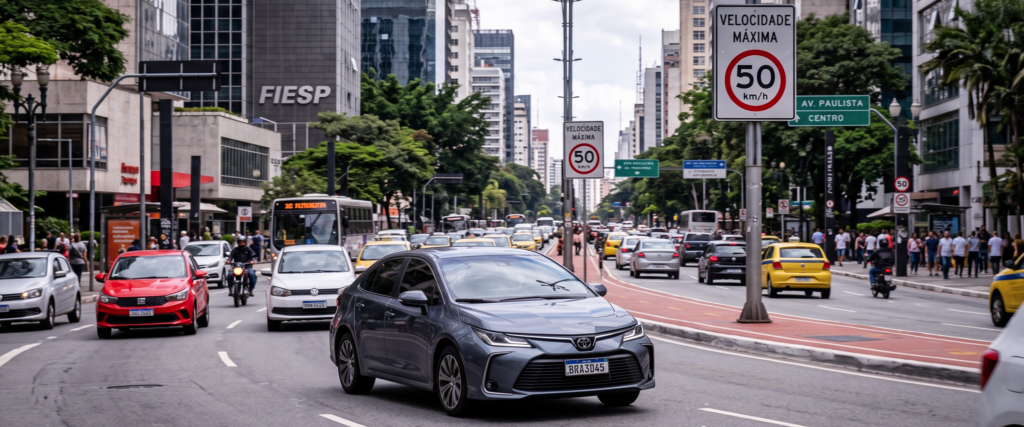
It starts malfunctioning the moment a car leaves the highway and enters the city , where the speed limit changes at every corner, but the control system continues to see only one number.
Speed control by section isn't about locking the car to a fixed speed limit. It's about knowing, lane by lane, if that speed limit still makes sense there. It's about identifying risks before they turn into fines, accidents , or worse, a life lost in traffic.
Executive summary
The fixed speed limiter locks the vehicle to a single speed limit., such as 110 km/h, but it does not recognize variable speed limits within urban areas.
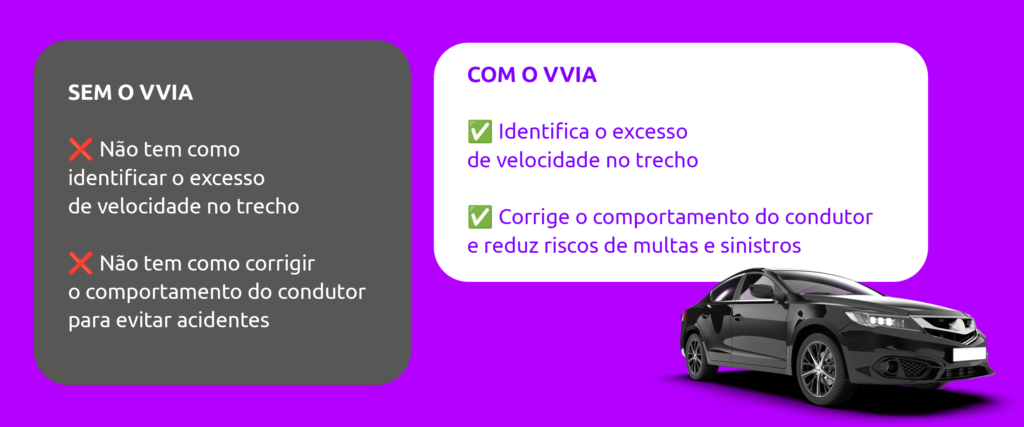
The Speed per Road system cross-references the vehicle's position with the regulated speed limit. from each segment, identifying excesses that the fixed limiter would never capture.
Most fines and serious accidents involving light vehicle fleets occur within cities.Not at a constant high speed on the road.
Browse the content
What is Speed by Lane?
Why does the fixed speed limiter lose strength within the city?
How does segment-by-segment reading work in practice?
How does Golfleet apply this to its fleet management?
What changes when the fleet sees speed per segment?
Speeding by road is not surveillance.
Speed per segment: the natural evolution of speed control

What is Speed by Lane?
Speed by Road is the technology that allows fleet management to compare , in real time, the actual speed of each vehicle with the regulated speed limit of the specific section of road where it is traveling at that exact moment.
This is different from simply locking the car to a fixed speed. The same road can have several sections with different speeds , and the system recognizes each one automatically, without depending on manual configuration by the management.
With this active reading, the operation gains access to indicators that a traditional speed control system would never provide:
- Most serious infraction recorded by driver or vehicle;
- Highest speed achieved in each section traveled;
- Total number of infractions, filtered by period, group, urban road or highway;
- Alerts are sent to the platform whenever an infraction is identified;
- Heat maps visually showing where excesses occur most frequently;
- Ranking of infractions, following the parameters of the Brazilian Traffic Code (medium, serious or very serious).
- Detailed reports by driver, vehicle, or road.
Why does the fixed speed limiter lose strength within the city?
A fixed speed limiter serves a purpose well: it prevents the vehicle from exceeding an absolute speed limit, such as 110 km/h or 120 km/h, in any situation. This limit is usually defined by the company's fleet policy as a general driving rule for vehicles. Even so, it is a restriction that acts on only one variable.
The problem is that the routine of a light vehicle fleet isn't limited to highway driving at constant speeds. It largely takes place within cities, with speed limits varying between 30, 40, 50, and 60 km/h in the same neighborhood , often on streets close to each other.
In this scenario, the fixed limiter simply doesn't see it:
- A driver traveling at 70 km/h on an urban road with a 50 km/h speed limit., since it is located below the roof configured in the vehicle;
- Excesses on specific stretches of highway, such as curves, bridges or school zones, where the limit temporarily drops;
- Quick transitions between road typesFor example, how to go from a 60 km/h avenue to a 30 km/h residential street in a few seconds.
The result is a dangerous blind spot: the operation remains within the limit on the control panel, while accumulating real risk on the streets.
How does reading by segment work in everyday life?
For managers to understand the value of this technology, it helps to see the workflow behind it.
1. The system recognizes the limit of each segment.
The platform automatically identifies the regulated speed limit for each section of road traveled by the vehicle, taking into account that the speed limit on the same road can vary at different points.
2. The actual speed is compared in real time.
All positions of all vehicles in the fleet are validated according to the speed limit for that specific section of road, not a single speed limit set for the entire route.
3. Management receives automatic alerts and reports.
Whenever an infraction is identified , the system generates an alert on the platform , in addition to feeding reports, rankings, and heat maps that show where the risk is concentrated.
How does Golfleet apply this to its fleet management?
The Speed by Route feature is not an isolated functionality; it connects to Golfleet's light fleet management solutions, expanding the understanding of the operation:
- With Golfleet Telemetry, the data Speed per segment is combined with operational performance indicators and driver driving profiles, supporting more efficient and intelligent management;
- With Golfleet VideotelemetryThis analysis is enhanced by video, facial recognition, and artificial intelligence, bringing greater security to decision-making regarding risk events;
- With Golfleet FlexThe fleet has access to usage, cost, and safety indicators with operational freedom, ideal for operations that do not require journey monitoring.
This combination transforms an isolated piece of data into a complete operational context : where it happened, how often, which driver was involved, and what the potential impact on cost and safety was.

What changes when the fleet sees speed per segment?
The change isn't just about having another report available. It's about the type of decisions that become possible.
Accidents and fines
Since most serious traffic violations occur on urban roads, not highways, identifying speeding violations by section directly reduces the fleet's exposure to fines and accidents, often before they happen.
Fuel and maintenance
More stable driving , without the sudden accelerations and braking associated with speeding, reduces fuel consumption and component wear, decreasing the frequency of corrective maintenance.
Driver behavior
Events that were previously based on subjective perception become objective interpretations, grounded in real data for each segment. This makes the conversation between manager and driver fairer and more productive.
Financial predictability
Fewer fines , fewer accidents , and less corrective maintenance mean a more predictable TCO ( Total Cost of Ownership), with fewer surprises in the fleet budget throughout the year.
Speeding by road is not surveillance.
This point needs to be clear.
The "Speed by Road" system doesn't exist to monitor drivers , but rather to provide real-world context about the operational risks. Drivers are the ones who face traffic every day, dealing with deadlines, unforeseen events, and road conditions that change from block to block; they are a direct ally of management, not its target.
With segment-by-segment data, the conversation between manager and driver ceases to be based on assumptions and becomes based on evidence: "in this specific section, the limit is 40 km/h, and we identified an average speed of 65 km/h" opens up space for guidance, training, and adjustment, not for punishment.
This type of reading strengthens the safety of all fleet drivers and contributes, day after day, to preserving lives on the roads.

Speed per segment: the natural evolution of speed control
A fixed speed limiter answers only one question: " Did the vehicle exceed the maximum speed limit? ". The question that truly protects the operation is another: " Did the driver respect the speed limit for that specific stretch of road at that exact moment? ".
With telemetry, video telemetry, and modules connected to the fleet's reality, Golfleet shows that this understanding doesn't depend on restructuring the entire operation ; it depends on transforming raw data into preventative decision-making.
Want to understand how to apply this logic to your fleet and reduce fines, accidents, and costs with greater predictability? Request a Golfleet demo.
Frequently Asked Questions about Speed Limits
What is Velocity per Road?
It is the technology that compares the actual speed of each vehicle with the regulated speed limit for the specific stretch of road where it is traveling, in real time.
What is the difference between a speed limiter and a speed limit per lane?
The speed limiter locks the vehicle to a single speed limit, regardless of the road. The Speed by Road system reads the limit for each section and identifies speeding even when the vehicle is far from that maximum limit.
Why do most serious traffic violations occur on urban roads?
Because light vehicle fleets operate predominantly within cities, where speed limits are lower and vary frequently, a scenario that a fixed speed limit cannot interpret.
Does the "Speed by Road" system serve to monitor drivers in a punitive way?
No. Technology exists to provide context about real operational risks and to support objective conversations between manager and driver, focusing on guidance and prevention.
How do I access Speed by Road?
The functionality is available through the Golfleet Telemetry and Golfleet Video Telemetry solutions for managing light vehicle fleets.